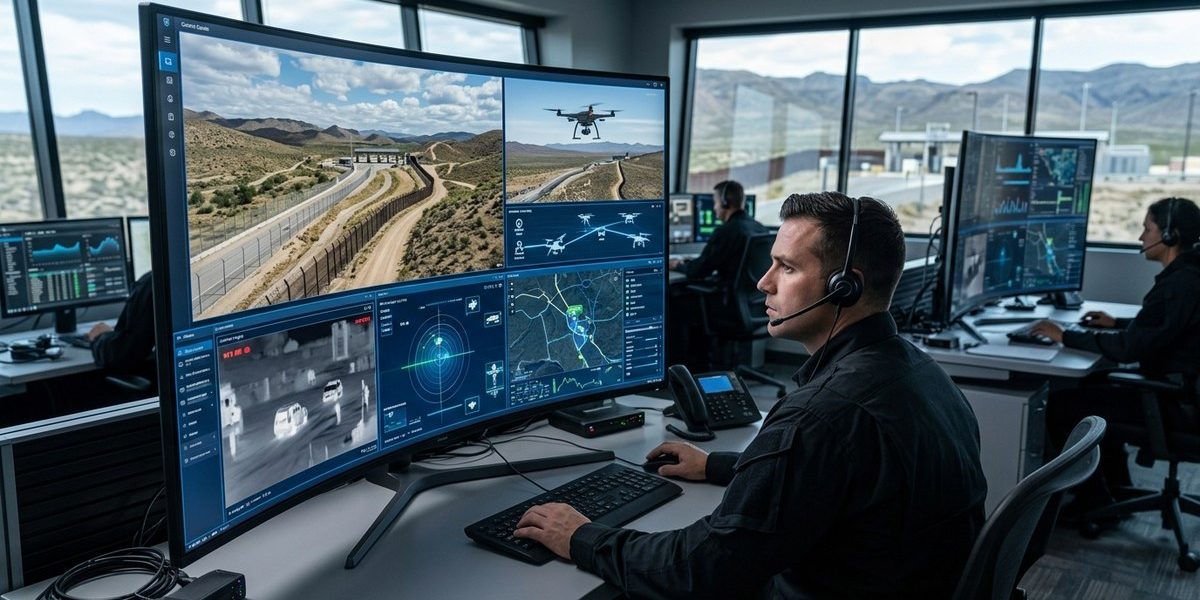
Border security today sits at the crossroads of high tech and high stakes. Every sensor, drone, biometric check, and data feed is part of a larger system designed to detect threats, streamline movement for legitimate travelers, and manage risk across vast and dynamic border landscapes. The result is a radically different picture from a few decades ago, when border control relied largely on physical barriers and human presence. Now, technology acts as a force multiplier, giving border agencies the ability to monitor, analyze, and respond in near real time. But with great capability comes great responsibility. Advances in surveillance, data analytics, and artificial intelligence raise important questions about privacy, civil liberties, and the human cost of enforcement. Caps-Blog.org dives into the tech that powers border security today, how it is used in practice, and what that means for communities, policy, and the future of humane and effective border management.
The tech stack driving border security today
Border security agencies deploy a diverse toolkit that blends field operations with advanced analytics and digital infrastructure. Below are core components you are likely to see in today’s border security programs.
Operations assets and sensing infrastructure
- Fixed and mobile sensors: camera towers, ground sensors, radar, lidar, and acoustic sensors track movement and environmental conditions across large stretches of land and along coastlines.
- Infrastructure monitoring: remote facilities, border fencing, and port infrastructure are equipped with monitoring systems to detect tampering, failures, or anomalous activity.
- Night and all-weather capability: thermal imaging and night vision extend surveillance to low-light conditions, helping operators identify heat signatures and potential threats.
Why it matters: A robust sensing backbone reduces blind spots and improves situational awareness for agents in the field and at command centers. It also creates a data-rich foundation for later analysis and decision making.
Persistent and mobile surveillance
- Unmanned aerial systems (UAS) and aerostats: drones and tethered balloons provide overhead coverage for large areas, enabling faster interdiction decisions without requiring as much manned patrol traffic.
- Mobile surveillance platforms: vehicles and handheld devices fed by cameras and sensor data bring situational awareness directly to officers on the move.
- Edge processing: some devices perform initial data processing in the field to speed up threat detection and reduce bandwidth needs for central systems.
Why it matters: Mobility is essential for rapid response. Persistent surveillance creates a continuous thread of observation, while mobile tools offer flexibility to adapt to evolving situations.
Data fusion, domain awareness, and analytics
- Data integration: information from cameras, sensors, manifests, license plate readers, biometric data, and intelligence feeds are fused to create a comprehensive view of border activity.
- Domain awareness: a real time picture of who, what, where, and when helps prioritize responses and allocate resources more effectively.
- Risk scoring and pattern recognition: analytics identify anomalies and recurring patterns that may indicate smuggling, human trafficking, or security concerns.
Why it matters: When data from many sources is combined intelligently, decision makers see a clearer threat picture and can act decisively rather than reactively.
Planning, detection, and classification
- Threat detection algorithms: models analyze signals to separate routine activity from potential risk, enabling more efficient use of resources.
- Classification frameworks: incidents are categorized by severity, vulnerability, and potential impact, guiding response protocols.
- Predictive capabilities: trend analysis helps agencies anticipate surges in travel, trafficking attempts, or illegal crossings, allowing preemptive action.
Why it matters: Strong planning and classification reduce false positives and ensure that enforcement actions are proportionate and targeted.
Biometric identity and access control
- Facial recognition and fingerprints: biometrics streamline identity verification at entry points and during interdiction operations.
- Identity verification for travelers: linking biometric data with travel documents accelerates checks while maintaining security standards.
- Data minimization and retention practices: responsible handling and disposal of biometric data are essential to protect privacy.
Why it matters: Biometrics can speed legitimate travel and strengthen border integrity, but privacy protections, data governance, and transparent oversight are critical to maintaining public trust.
Cybersecurity, governance, and infrastructure management
- Secure communications: encrypted channels and resilient networks protect the flow of sensitive data between points of presence and command centers.
- Cloud readiness and data sovereignty: border agencies increasingly leverage cloud services, while maintaining control over where data resides and how it is accessed.
- Incident response and resilience: organized playbooks, threat monitoring, and crisis exercises help agencies respond to cyber and physical security incidents alike.
Why it matters: The digital backbone must be as secure as the physical one. A breach can compromise not just sensitive information but the safety of operations and people involved.
Real world applications: borders as a dynamic operating environment
Technology is practical and visible in many everyday border operations. Here are some of the key use cases where tech translates into safer, smoother processes.
Travel and trade monitoring and screening
- Manifest and risk-based screening: electronic manifests, automated risk scoring, and data cross checks with commercial databases help identify high risk shipments and travelers before they reach the border.
- Trusted traveler programs: technology supports expedited processing for low risk individuals, balancing throughput with security.
- Smart ports of entry: integration of data streams at entry points enables faster adjudication and reduces congestion without compromising detection capabilities.
Why it matters: Efficient travel and trade support economic vitality while maintaining security through smarter prioritization rather than blanket checks.
Cross-border movement and vehicle analytics
- License plate readers and vehicle analytics: automated reads help verify vehicle identities and match against watch lists or seizure databases.
- Behavioral and route analysis: patterns in movement, stop locations, and trip duration inform risk assessment and resource deployment.
- Interoperability across jurisdictions: shared data standards and open interfaces allow different agencies to work together more effectively.
Why it matters: Coordinated data sharing across jurisdictions improves coverage and reduces the chance of gaps that criminals could exploit.
Threat detection and anomaly recognition
- Behavioral indicators and anomaly detection: systems look for deviations from normal patterns that may signal smuggling, evasion, or other illicit activity.
- Sensor fusion for early warning: combining signals from multiple sensors increases sensitivity to real threats while reducing false alarms.
- Human-in-the-loop verification: automated alerts are reviewed by trained officers to ensure accuracy and appropriate action.
Why it matters: Early warnings enable proactive interventions that can prevent illegal activity and protect communities.
Case study style scenarios (illustrative, not prescriptive)
- Scenario A: A coastal region uses a network of sensors and drones to monitor for small boat incursions at night. AI helps prioritize patrols, while human analysts verify potential intrusions before deployment of responders.
- Scenario B: A land border port implements a data hub that cross checks travelers against watch lists and prior travel history. This reduces processing time for routine travelers while flagging higher risk cases for in depth screening.
- Scenario C: A remote corridor expands its biometric verification with privacy-by-design controls, ensuring data minimization and clear retention timelines to maintain trust with local communities.
Why it matters: Real world applications show how integrated tech can improve safety and efficiency when paired with thoughtful governance and human oversight.
Human rights, privacy, and oversight in a digital border world
Technology can raise legitimate concerns about civil liberties and the potential for misuse. Addressing these concerns is essential for sustainable, legitimate border security programs.
Civil liberties and oversight
- Transparent reporting: public dashboards and annual reports help communities understand what technologies are in use and how data is handled.
- Independent oversight: external reviews by civil society, privacy commissioners, or parliamentary bodies help hold agencies accountable.
- Safeguards against abuse: strict access controls, data minimization, purpose limitation, and audit trails reduce risk of misuse.
Why it matters: Trust is earned when citizens see that security tech protects both safety and rights, not just security.
Community impact and detention considerations
- Human cost awareness: technology can change how detention decisions are made, potentially affecting the duration and quality of custody.
- Alternatives to detention: data-driven risk assessments can support non custodial options where appropriate, reducing the burden on individuals and families.
- Community engagement: ongoing dialogue with communities helps tailor deployments to minimize harm and improve legitimate access.
Why it matters: Explaining the rationale behind technology deployments and listening to community concerns helps ensure humane and proportionate enforcement.
Safeguards, transparency, and redress
- Data protection measures: encryption, access logging, and retention policies protect personal information.
- Explainability and accountability: where possible, decisions influenced by AI should be explainable to individuals and oversight bodies.
- Redress pathways: individuals should have clear avenues to challenge erroneous or harmful data practices.
Why it matters: The social license to operate for border tech depends on credible, enforceable protections and channels for remedy.
Policy landscape and emerging technology governance
The policy context shapes how border tech is developed, deployed, and controlled. Key threads include legislative proposals, privacy laws, and interagency collaboration standards.
Emerging Innovative Border Technologies Act
- Purpose: to address emerging border tech in a structured way, balancing innovation with safeguards.
- Provisions: potential for pilot programs, review processes, and reporting requirements to ensure accountability.
- Implications: acts as a test bed for new tools while inviting oversight and community input before broad deployment.
Why it matters: Legislation can provide a framework that supports innovation without compromising civil liberties.
FISA reauthorization, data sharing, and oversight
- Data sharing frameworks: clarifying which agencies can access which data, and under what conditions.
- Oversight enhancements: ensuring continued judicial and legislative oversight for sensitive surveillance tools.
- Privacy protections: codifying minimization standards, retention limits, and purpose limitations.
Why it matters: A robust policy environment helps prevent mission creep and protects individuals while allowing efficient border management.
State, local, and community roles
- Local input: community stakeholders can provide valuable feedback on how tech affects daily life and public safety.
- Interoperability standards: consistent data formats and protocols aid collaboration across agencies and jurisdictions.
- Public awareness: accessible explanations of how tools work build trust and reduce misinformation.
Why it matters: Borders are not just federal matters; local implementation and public sentiment shape where and how technology is used.
The future of border technology: balancing security with rights
Innovation will continue to accelerate, but the trajectory will be shaped by ethical considerations, governance, and the demonstrated value of the tools.
Artificial intelligence, privacy by design, and explainability
- Privacy by design: embedding privacy controls into system architecture from the outset.
- Explainable AI: designing algorithms whose decisions can be understood by humans, particularly in high stakes enforcement.
- Human oversight: maintaining a strong human-in-the-loop framework to prevent overreliance on automated judgments.
Why it matters: Trust and legitimacy hinge on systems that people can understand and institutions that can be held accountable.
Cost, maintenance, and interoperability
- Total cost of ownership: upfront procurement is only part of the equation; ongoing maintenance, updates, and training matter.
- Interoperability: open standards and modular designs reduce vendor lock-in and improve collaboration across agencies.
- Lifecycle planning: long term sustainability and replacement cycles keep systems effective without wasting resources.
Why it matters: Sustainable technology programs deliver reliable performance without draining public resources or creating false expectations.
Human-centered border security
- Proportionality and necessity: tools should be deployed where they add real value without excessive intrusion.
- Community-centric design: involving communities in planning and reviewing deployments improves outcomes and reduces harm.
- Alternatives and safeguards: balancing enforcement with humanitarian considerations, including alternatives to detention when appropriate.
Why it matters: The most durable border security combines rigorous effectiveness with compassion and respect for human dignity.
Practical takeaways for readers
- Technology enhances border security by turning mountains of data into actionable insight, allowing smarter deployment of personnel and resources.
- A balanced approach requires robust privacy protections, independent oversight, and ongoing community engagement.
- Policy frameworks and legislation play a pivotal role in guiding responsible innovation while enabling necessary security functions.
Here are practical steps for readers who want to follow or influence this space:
- Stay informed about how border tech is deployed in your region and which agencies are involved.
- Support transparency efforts such as public reporting on surveillance tools, data practices, and accountability mechanisms.
- Encourage privacy by design in procurement and deployment of new technologies.
- Promote dialogue between law enforcement, civil society, and affected communities to address concerns early.
- Consider ethical implications when discussing enforcement and immigration policy, focusing on human rights as a central pillar.
Final thoughts
Technology is not a silver bullet for border security, but it is a powerful enabler when used thoughtfully, with strong governance, and a clear commitment to human rights. The promise of faster processing, better threat detection, and smarter resource use depends on transparent practices, careful risk management, and continuous evaluation. As border landscapes evolve, Caps-Blog.org will continue analyzing how technology intersects with immigration, security, and enforcement—offering insights for practitioners, policymakers, and readers who care about effective security that respects human dignity.